
 HOME
HOME




Is the claim about Methane valid?
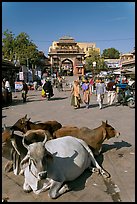
Part 2: The IPCC’s ArgumentIn 2008, the UN issued a paper urging us to eat less meat to curb global warming. This was no surprise as the IPCC is an arm of the UN The UN’s Food and Agriculture Organization estimated that meat production accounts for nearly a fifth of global greenhouse gas emissions. These, they said, are generated during the production of animal feeds; while ruminants, particularly cows, emit methane from both ends. The UN went on to warn that meat consumption was set to double by the middle of the century, and that methane is 23 times more effective as a global warming agent than carbon dioxide. Dr Rajendra Pachauri, chair of the United Nations Intergovernmental Panel on Climate Change, and, according to The Observer, the ‘world’s leading authority on global warming’, although his PhDs are in economics and engineering, said that people should have one meat-free day a week if they want to make a personal and effective sacrifice that would help tackle climate change.[4] He then said that people should go on to reduce their meat consumption even further. It would be relatively easy, Dr Pachauri said, to change eating habits compared to changing means of transport. ‘In terms of immediacy of action and the feasibility of bringing about reductions in a short period of time, it clearly is the most attractive opportunity,’ said Pachauri. But Dr Pachauri is a vegetarian Hindu. He not only used highly tendentious figures to promote his cause, he managed to forget to mention the methane contribution made to global warming by India’s 400 million sacred cows. No doubt they would they still be free to expel methane even if humanity were reduced to eating veggieburgers. The animal welfare group, Compassion in World Farming, which is also composed of vegetarian lobbyists, said it had calculated that if the average UK household halved meat consumption that would cut emissions more than if car use was cut in half. They called for governments to lead campaigns to reduce meat consumption by 60% by 2020. Campaigners also pointed out the ‘health benefits of eating less meat’. (Now, while I admitted in my introduction that climate change is not my main area of expertise, nutrition is – and I cannot think of any benefits to our health which would accrue from eating less meat. It’s eating less meat that has given us the many chronic degenerative diseases we suffer today. But that’s the subject of another book.[5]) The average person in the UK eats 50g of protein from meat a day, equivalent to a chicken breast and a lamb chop, which is hardly excessive for a carnivorous species. On the other side, on May 14, 2008, Congressman Rohrabacher spoke in the US House of Representatives about Global Warming and made a very telling point for sanity. After talking about how the global warmers would like to ban cattle because of their methane flatulence emissions he said:
So who is right? Before we go down this road with its huge implications not just for our health, but also for our economies, just how important a greenhouse gas is methane? We really need to look at the science. Part 1: Introduction | Part 2:The IPCC’s Argument | Part 3: Methane chaos | Part 4 Science and references |
Related Articles
