
 HOME
HOME



'Heart-healthy' spreads increase heart attack risk
We have all been conditioned to believe that, to avoid a heart attack, we need to lower our blood cholesterol, and particularly our LDL-cholesterol. Originally, dietary cholesterol was blamed and, because cholesterol is found only in animal products, more and more people have turned away from meat and towards eating foods from plants. But chole-sterol is only one of a whole family of sterols. Cholesterol is found only in animals; the other sterols are found in plants.
When a discovery was made that the plant sterols had a tendency to lower blood cholesterol levels, several margarines, such as Flora Proactive and Benecol were developed which incorporated these sterols. And because they had a cholesterol-lowering effect, these margarines and spreads could be aggressively marketed with health benefit claims.
|
|
Plant sterols may be 'heart-harmful'
Dr J. Plat and colleagues at Maastricht University’s Department of Human Biology in the Netherlands, say that these plant sterols may actually be more important in heart disease than cholesterol.1 Because plant sterols are structurally related to cholesterol, Plat and colleagues examined whether oxidized plant sterols (oxyphytosterols) could be identified in human blood and soy-based fat emulsions. They could. Approximately 1.4% of the plant sterol, sitosterol, in blood was oxidized. This may not seem very much, but it is 140 times as much as the 0.01% oxidatively modified cholesterol normally seen in human blood. The same was also found in two soy emulsions.2 Research published in 2008, on both humans and animals, suggested that ‘functional foods’ aimed at lowering cholesterol may actually increase the risk of a heart attack.3
|
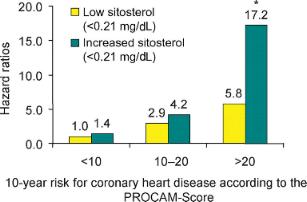
|
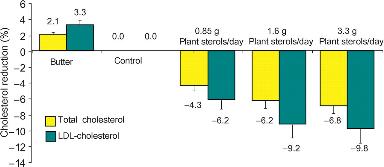
This was confirmed the following year by a study which tested plant sterols found in so-called ‘heart healthy’ margarines such as Benecol and Flora Proactive.4 This study showed clearly that these products lower cholesterol (left graph); but it also showed just as clearly (right graph) they actually increased the risk of a heart attack – the very condition they are touted as preventing. Despite this, the manufacturers can still legally call these products (I nearly made the mistake of calling them ‘foods’) ‘heart healthy’. We live in cloud-cuckoo land!
In fact, we should not be surprised that plant sterols are much more likely candidates for ill-health than cholesterol, because the popular idea that animal products, specifically protein, cholesterol, and saturated fatty acids, somehow factor in causing atherosclerosis, stroke or heart disease is not supported by any available data, including from research in the field of lipid biochemistry.1,5-7 On this point, it is interesting that Dr Ancel Keys, whose 1953 hypothesis began the fatty-diet-causes-heart-disease dogma did not recommend cutting down on animal fats. He recommended cutting vegetable oils.
References
1. Plat J, et al. Oxidized plant sterols in human serum and lipid infusions as measured by combined gas-liquid chromatography-mass spectrometry. J Lipid Res 2001; 42: 2030-2038.
2. Ravnskov, Uffe. The Cholesterol Myths. Washington, DC: New Trends Publishing Inc, 2000. p. 109.
3. Mann GV (ed). Coronary Heart Disease: The dietary sense and nonsense. London: Veritas Society, 1993.
4. Weingärtner O, Böhm M, Laufs U. Controversial role of plant sterol esters in the management of hypercholesterolaemia. Eur Heart J 2009; 30: 404-409;
5. Weingärtner O, et al. Plant sterols as dietary supplements for the prevention of cardiovascular diseases. Dtsch Med Wochenschr 2008; 133: 1201-4.
6. Enig M. Know Your Fats: the complete primer on fats and cholesterol. Maryland: Bethesda Press, 2000, 76-81.
7. Smith R, Pinckney E. Diet, Blood Cholesterol, And Coronary Heart Disease: a critical review of the literature. California; Vector Enterprises, 1991.
Last updated 20 April 2009
Related Articles
